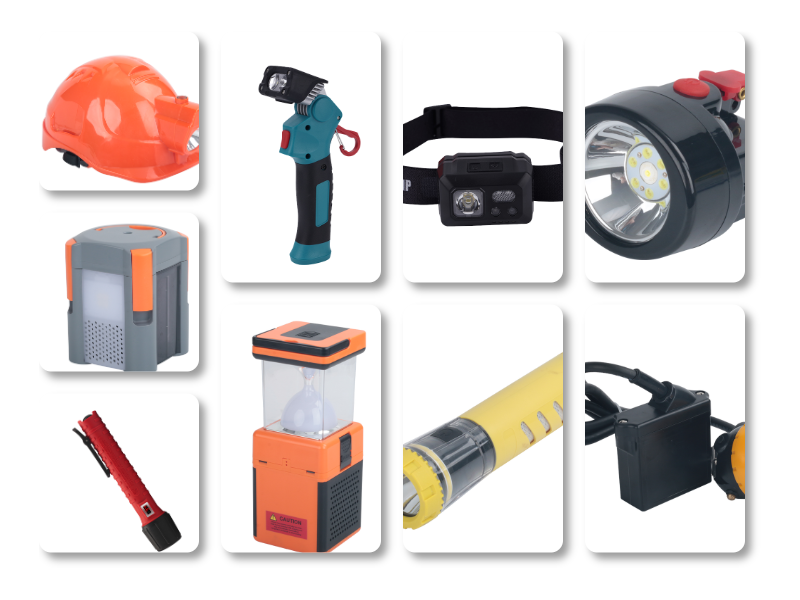
In the bustling landscape of China's chemical industry, where safety and efficiency are paramount, ATEX tactical flashlights have emerged as a vital tool for workers and security personnel. This article delves into the significance of ATEX flashlights in chemical plants, their features, and the role they play in ensuring a safe working environment.
**Introduction**
Chemical plants are dynamic environments where visibility is crucial for the safety of employees and the integrity of operations. ATEX tactical flashlights, designed to meet the stringent safety standards of the European Union's ATEX directive, have become a popular choice in China's chemical industry. These flashlights are not just about illumination; they are about providing a reliable source of light in potentially hazardous areas.
**The Significance of ATEX Flashlights in Chemical Plants**
Chemical plants are prone to hazardous environments due to the presence of flammable gases, vapors, and dust. The ATEX directive (Atmospheres Explosibles) is a set of regulations that outlines the minimum safety requirements for equipment used in potentially explosive atmospheres. ATEX tactical flashlights are designed to comply with these standards, making them ideal for use in chemical plants.
One of the primary reasons for using ATEX flashlights in chemical plants is the risk of explosions. These flashlights are constructed with non-sparking materials and have sealed switches to prevent the generation of sparks, which could ignite flammable substances. This feature not only ensures the safety of workers but also protects the plant's operations from costly downtime due to accidents.
**Features of ATEX Tactical Flashlights**
ATEX tactical flashlights come with a range of features that make them suitable for use in chemical plants. Some of the key features include:
1. **Non-Sparking Design**: As mentioned earlier, ATEX flashlights are designed to prevent the generation of sparks, making them safe for use in explosive atmospheres.
2. **Impact Resistance**: Chemical plants can be rough environments, and ATEX flashlights are built to withstand drops and impacts, ensuring they remain functional even in harsh conditions.
3. **Waterproofing**: These flashlights are often waterproof, making them suitable for use in wet or damp conditions, which are common in chemical plants.
4. **Long Battery Life**: With operations in chemical plants often requiring extended hours, ATEX flashlights are equipped with long-lasting batteries to ensure continuous illumination.
5. **Durable Construction**: Made from high-quality materials, ATEX flashlights are built to last, providing reliable performance over time.
**The Role of ATEX Flashlights in Ensuring Safety**
In addition to preventing explosions, ATEX tactical flashlights play a crucial role in ensuring the safety of workers in chemical plants. They provide a reliable source of light in low-light or dark environments, enabling workers to see clearly and perform their tasks safely. This is particularly important in emergency situations, where quick and accurate responses can be the difference between life and death.
**Conclusion**
ATEX tactical flashlights have become an essential tool in China's chemical industry, providing a safe and reliable source of light in potentially hazardous environments. With their non-sparking design, impact resistance, waterproofing, and long battery life, these flashlights are a testament to the importance of safety in the chemical industry. As the industry continues to grow, the demand for ATEX flashlights is expected to rise, ensuring that workers can perform their duties safely and efficiently.