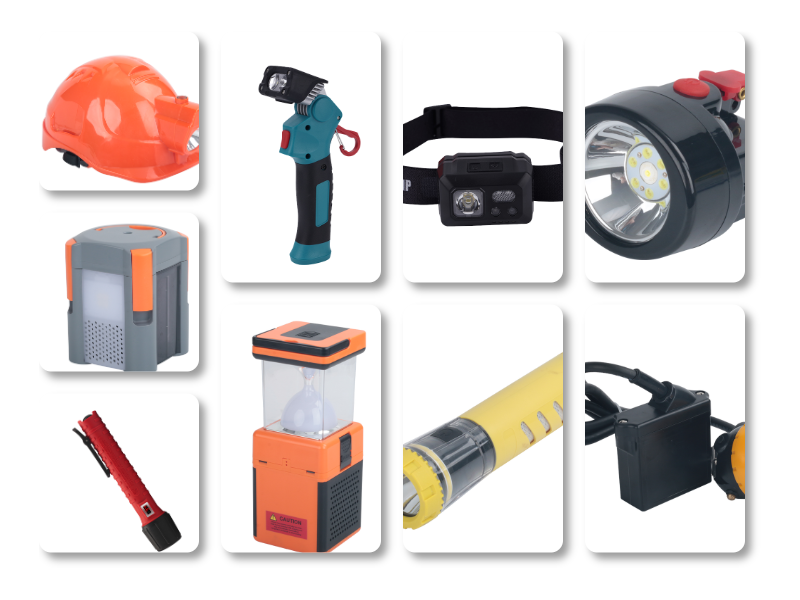
The oil and gas industry is one of the most crucial sectors in the global economy. In China, this industry has seen remarkable growth over the years, driven by technological advancements and a relentless pursuit of safety. One such innovation that has gained significant attention is the intrinsically safe tactical flashlight, a vital tool for professionals working in oil gas environments. This article explores the evolution and importance of these flashlights in China's oil gas industry.
The oil gas industry is characterized by its hazardous environments, where the risk of fire and explosion is ever-present. In such conditions, traditional flashlights are not only ineffective but also pose a significant safety risk. This is where intrinsically safe tactical flashlights come into play. These flashlights are specifically designed to operate in hazardous areas without the risk of sparking an explosion.
The concept of intrinsically safe equipment originated in the early 20th century. The principle is based on limiting the energy available in a system to a level where it cannot ignite flammable gases or dust. This is achieved by using low-energy electrical circuits and minimizing the surface area of conductive parts. In China, the adoption of intrinsically safe technology in the oil gas industry has been a game-changer.
The rise of intrinsically safe tactical flashlights in China can be attributed to several factors. Firstly, the government's strict safety regulations have played a pivotal role in promoting the use of such equipment. These regulations are designed to protect workers from accidents and ensure the smooth operation of oil gas facilities.
Secondly, the increasing number of oil gas projects in China has created a high demand for reliable and safe tools. Companies operating in this industry are aware of the potential risks and are willing to invest in equipment that can mitigate these risks. Intrinsically safe tactical flashlights have become an essential tool in this regard.
One of the key advantages of these flashlights is their durability. They are designed to withstand harsh conditions, including extreme temperatures, humidity, and dust. This makes them ideal for use in oil gas environments where conditions can be unpredictable.
Another significant feature of these flashlights is their brightness. In hazardous areas, visibility is crucial, and these flashlights provide ample light to ensure safe operations. The advanced LED technology used in these flashlights not only offers high brightness but also has a long lifespan, reducing maintenance costs.
Chinese manufacturers have made significant strides in producing high-quality intrinsically safe tactical flashlights. These manufacturers have adopted the latest technology and are constantly innovating to meet the evolving needs of the oil gas industry. The competition among these manufacturers has led to the development of a wide range of products, offering users more choices.
Moreover, the Chinese government's push for energy independence has further fueled the growth of the oil gas industry. This has, in turn, increased the demand for intrinsically safe equipment, including tactical flashlights. As the industry continues to expand, the importance of these flashlights will only grow.
In conclusion, the rise of intrinsically safe tactical flashlights in China's oil gas industry is a testament to the country's commitment to safety and technological innovation. These flashlights have become an indispensable tool for professionals working in hazardous environments, ensuring their safety and the smooth operation of oil gas facilities. As the industry continues to grow, the demand for such equipment is expected to increase, further driving the development of advanced safety technologies.